The 16th Pathfinder HI SCience Community Workshop (PHISCC) Workshop was held at the Kavli Institute for Astronomy and Astrophysics (KIAA) at Peking University from October 12-16, 2026. More than 100 participants attended the conference to discuss neutral hydrogen (H I) in nearby galaxies. Over half of the participants were international, including from Germany, Italy, Japan, the United States, South Africa, Australia, and other countries. The conference was organized by Jing Wang, Chair of the Scientific Organizing Committee and Associate Professor at KIAA at Peking University, with help from researchers and early-career scientists in China, including the local organizing committee at KIAA, and abroad.
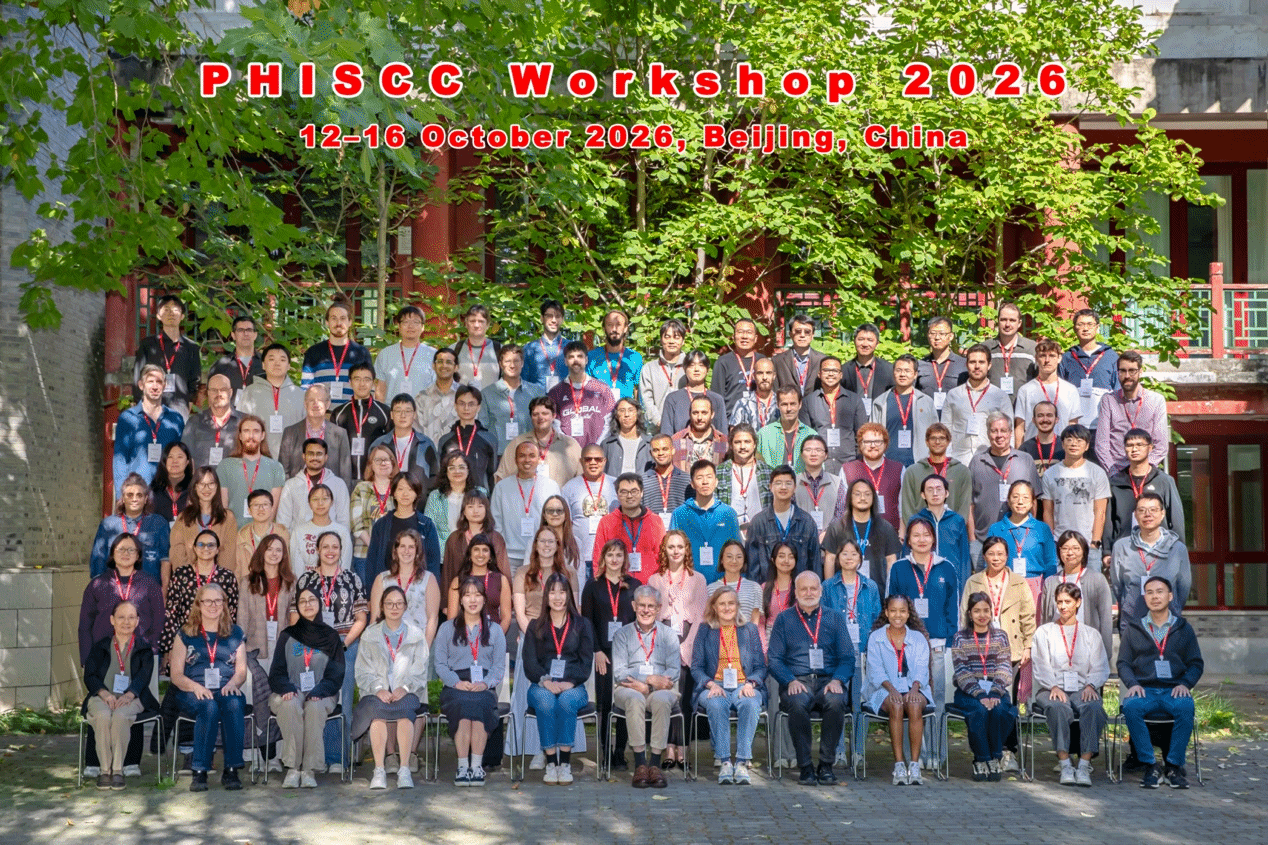
Figure 1: Group photo of conference participants
The PHISCC series of workshops began in 2009, originally organized by the SKA Pathfinder H I Science Coordination Committee to coordinate H I survey activities on SKA precursor and pathfinder facilities. As H I surveys have been carried out comprehensively and produced abundant results with current facilities, PHISCC has developed into an open forum for the H I science community. The annual PHISCC workshops promote discussion of the latest results and technical methods, strengthen community building, and place emphasis on attracting early-career researchers. The 2026 PHISCC workshop is the second of the series in China, following the 2018 meeting in Pingtang, Guizhou.
Figure 2: On the registration day, the LOC assists participants with registration (left); participants discuss during a tea break (right)
This year's conference adopted a new format of "morning plenary sessions + afternoon breakout sessions" throughout the five-day program. The plenary sessions featured themes of "Evolution and Cosmology," "ISM Structure and Properties and Star Formation," "Gas Around Galaxies and Accretion," "Environment," "Dynamics," and "AGN." The content covered frontier directions including high-redshift HI properties, the latest survey results from facilities such as FAST, ASKAP, and MeerKAT, diffuse gas and gas accretion around galaxies, environmental effects in galaxy clusters, galaxy dynamics, and AGN feeding and feedback. Each talk was followed by questions and answers, often with lively discussions.
Figure 3: Opening remarks by KIAA Associate Director for Science Gregory Herczeg (left) and Prof. Jing Wang (right)
The conference also included breakout discussions and tutorial sessions on Future Instruments, Spectral Stacking, Kinematic Modeling, and Source Finding, as well as team meetings for FAST Core Array, WALLABY, and Fornax. The Future Instruments session focused on discussions of science with SKA, MeerKAT+, ASKAP+ and CryoPAF, FAST Core Array, and DSA. The kinematic modeling and source finding tutorials provided methods training for early-career researchers. The WALLABY student exchange event showcased the progress of young scholars in H I data processing and scientific research. Poster presentations during the conference also provided a format for early-career researchers to present their work The conference was livestreamed via the Kuoshare platform to make it easier for more H I researchers who could not attend in person to participate.
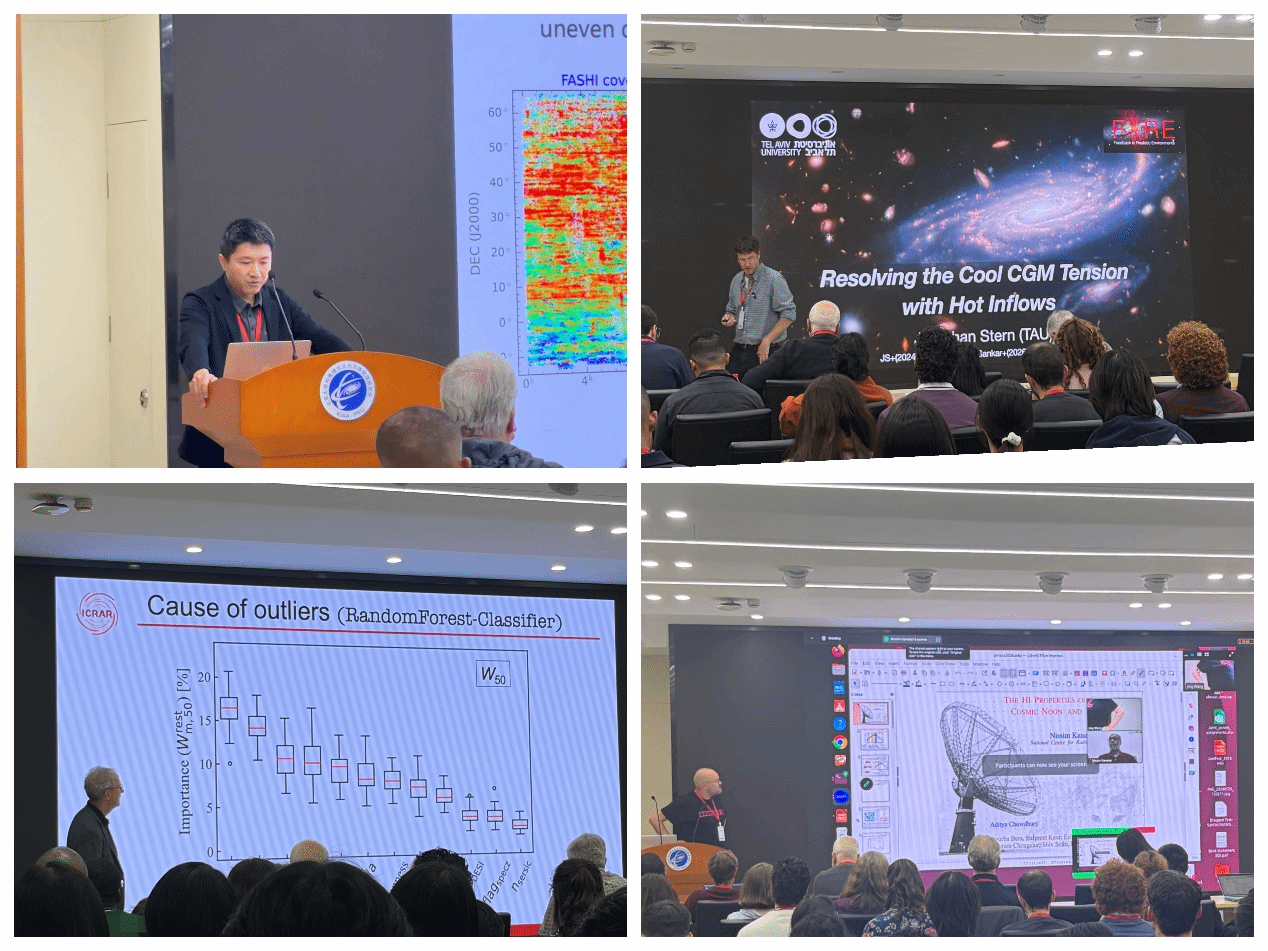
Figure 4: Photos of selected conference talks: Prof. Hong Guo (SHAO, upper left), Prof. Jonathan Stern (TAU, upper right), Prof. Lister Staveley-Smith (UWA, lower left), and Prof. Nissim Kanekar (NCRA, remote; lower right).
At the closing session, the conference summarized the plenary presentations, and participants joined in thanking the LOC and KIAA administrative and logistics staff for their efforts. Participants agreed that this year's conference brought together and showcased the latest progress of contemporary radio telescope facilities that are SKA precursors and pathfinders in H I surveys and related multi-wavelength research, strengthened exchanges among the science, observation, and data processing communities, and provided a platform for early-career researchers to present and learn. The workshop also highlighted Chinese leadership in FAST and the FAST Core Array, as well as Chinese participation in SKA and other SKA pathfinder and precursor facilities.
The conference was organized by the Scientific Organizing Committee of Barbara Catinella (ICRAR), Thijs van der Hulst (Kapteyn Institute), Nissim Kanekar (NCRA - TIFR), Gabriella De Lucia (INAF), Elizabeth Mahony (CSIRO - ATNF), D.J. Pisano (University of Cape Town), Paolo Serra (INAF - Cagliari), Snezana Stanimirovic (UW–Madison), and Prof. Jing Wang (KIAA), and by the Local Organizing Committee (LOC) of Qifeng Huang, Xuchen Lin (Chair), Shuyan Liu, Fangzhou Ren, Min Sun, Jing Wang, Dong Yang, and Shuo Zhang. This conference was supported by the Key R&D Program of the Ministry of Science and Technology of China (grants 2022YFA1602902 and 2025SKA0150101). The next workshop will be held in Kingston, Ontario, Canada.
